In general, a method is a way to perform some task. Similarly, the method in Java is a collection of instructions that performs a specific task. It provides the reusability of code. We can also easily modify code using methods. In this section, we will learn what is a method in Java, types of methods, method declaration, and how to call a method in Java.
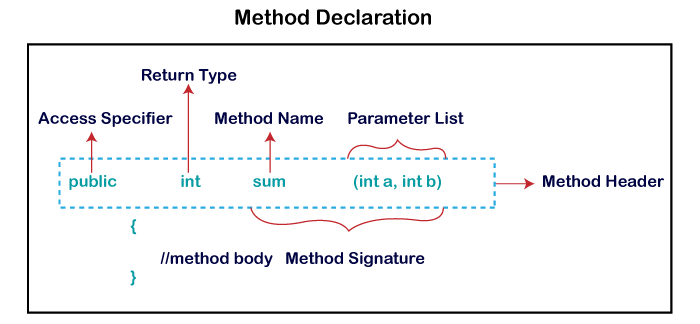
Method Signature: Every method has a method signature. It is a part of the method declaration. It includes the method name and parameter list.
Access Specifier: Access specifier or modifier is the access type of the method. It specifies the visibility of the method. Java provides four types of access specifier:
- Public: The method is accessible by all classes when we use public specifier in our application.
- Private: When we use a private access specifier, the method is accessible only in the classes in which it is defined.
- Protected: When we use protected access specifier, the method is accessible within the same package or subclasses in a different package.
- Default: When we do not use any access specifier in the method declaration, Java uses default access specifier by default. It is visible only from the same package only.

 Site Title